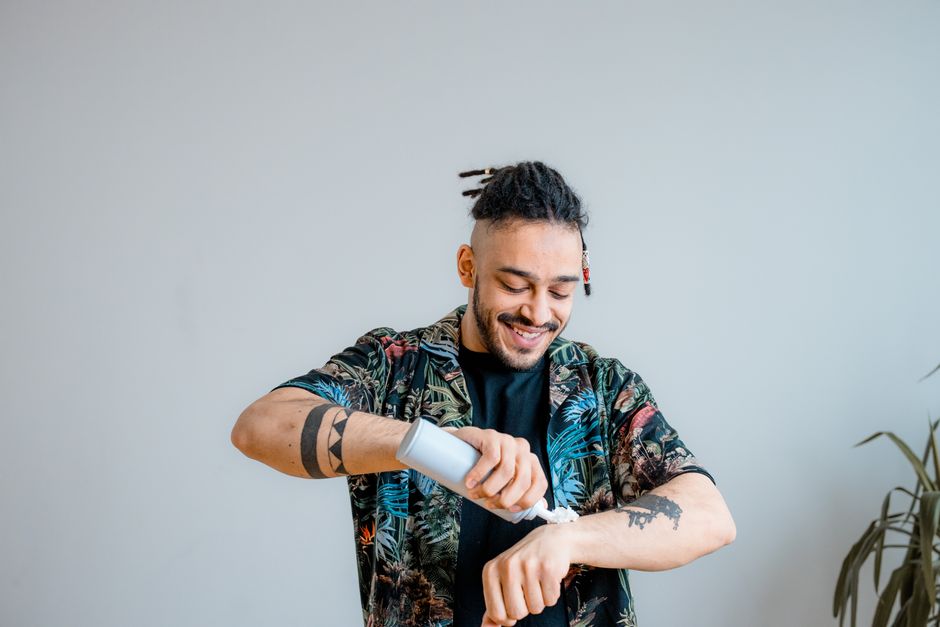
How should a man treat sunburned skin without turning a painful red face, chest, or back into a peeling mess? The safest answer is simple: cool the skin, reduce friction, moisturize gently, and stop using products that sting. Sunburn is an injury caused by ultraviolet radiation, not a normal grooming problem that a strong scrub can fix.
Men do not need a separate kind of skin biology after sun exposure. Beard growth, shaving, body hair, sweat, and tight shirts do change how care feels and how easily a product reaches the skin. Those details matter, but they do not make harsh aftershave or scented body lotion a good treatment.
The American Academy of Dermatology recommends getting out of the sun, taking cool baths or showers, and applying a moisturizer containing aloe vera or soy while the skin is still damp. Its sunburn guidance also supports medical care when symptoms are severe.
What sunburn does to men’s skin after the beach
Sunburn is a surface injury, not ordinary dryness
A mild sunburn affects the outer layer of skin and creates inflammation. That is why the area feels hot, tight, tender, or unusually sensitive to clothing. The redness may appear several hours after exposure, so a man can leave the beach feeling fine and wake up with a painful neck or shoulders the next morning.
The first principle of after-sun care is to stop adding heat and friction. A moisturizer can reduce the dry, tight feeling, but it does not erase ultraviolet damage. Aloe gel may feel soothing, yet evidence does not prove that aloe makes sunburn heal faster. The sensible claim is comfort, not a miracle repair.
Why shaving and fragrance can make the face feel worse
Freshly shaved skin has already lost some surface protection through hair removal and repeated rubbing. Add heat, salt, sweat, and ultraviolet injury, and a fragranced aftershave can sting sharply. Alcohol-heavy splashes, essential oils, exfoliating acids, retinoids, vitamin C serums, scrubs, and strong acne treatments belong on pause until the skin no longer feels hot or painful.
Facial hair creates a second practical problem. A dense beard can hide redness and make it difficult to spread moisturizer evenly. Work a small amount through the beard with clean fingertips, but do not pull at flaking skin or scratch the area underneath.
What healing normally looks like
Mild sunburn often improves over several days and may peel afterward. Peeling is the body shedding damaged surface cells; it is not an invitation to pull off loose skin. Keep the area covered from direct sunlight, wear a loose shirt, and give the skin time to settle. The NHS sunburn guidance states that many cases improve within about seven days, but the timeline varies with the depth and size of the burn.
For dry, tight skin, apply a plain, fragrance-free moisturizer after a cool shower. Pat dry instead of rubbing. A short routine is better than a crowded shelf of active ingredients.
What to do in the first 24 hours
A practical first-day schedule
The best first-day plan is boring, repeatable, and easy to follow. Leave the sun as soon as the skin starts to feel hot or sore. Do not wait for visible redness. Then use the following sequence:
| When | Action | Reason |
|---|---|---|
| Immediately | Move indoors or into deep shade and remove tight, sweaty clothing. | Stops continued ultraviolet exposure and reduces rubbing. |
| Within 30 minutes | Take a cool shower or place a cool, damp cloth on the area for about 10 minutes. | Helps lower surface heat and ease discomfort. |
| After cooling | Pat the skin partly dry and apply an unperfumed moisturizer or aloe-based lotion. | Traps moisture without adding heavy friction. |
| During the day | Drink fluids, rest, and stay out of direct sun until the redness has healed. | Sunburn can occur with dehydration and heat illness. |
| At night | Wear a loose cotton shirt and avoid sleeping on the burned area when possible. | Limits pressure and fabric friction. |
Cooling has limits
Use cool tap water, not ice or an ice pack. Extreme cold can irritate already injured skin and create another form of tissue damage. A cool shower should feel relieving, not painful or numbing. If the skin begins to blister, leave the blister intact. The fluid-filled roof protects the tender skin beneath it.
Medication requires label discipline
Over-the-counter pain relievers such as ibuprofen or acetaminophen may reduce discomfort for some adults, but the correct choice depends on allergies, kidney disease, stomach ulcers, blood thinners, liver disease, other medicines, and the product label. A pharmacist can check for conflicts. Do not apply benzocaine or similar numbing products casually; Mayo Clinic warns that these products can irritate skin and benzocaine has been linked with a rare blood-oxygen problem.
Do not place ice, butter, toothpaste, perfume, or a thick layer of petroleum jelly over hot, actively burning skin. If a product causes sharp stinging that lasts, wash it off and stop using it.
Which after-sun products are worth buying?

Choose texture and tolerance over a masculine label
For most men with mild, intact sunburn, CeraVe Moisturizing Cream is the best all-around buy. The 19-ounce face-and-body format gives broad coverage, while three essential ceramides, hyaluronic acid, petrolatum, and dimethicone support moisture retention. It is fragrance-free and non-comedogenic. Apply a thin layer after cooling, not a heavy coat over hot skin.
For highly reactive skin, Vanicream Moisturizing Cream is the clearest alternative. Its 16-ounce pump format contains a short formula, no fragrance, no botanical extracts, and no essential oils. It is thick enough for dry shoulders and arms but still spreads easily. The tradeoff is a heavier feel than a lotion, so it may be less comfortable under a fitted shirt.
| Product | Specific detail | Best use | Verdict |
|---|---|---|---|
| CeraVe Moisturizing Cream | 19 oz size; three ceramides, hyaluronic acid, petrolatum, and dimethicone. | Large areas of mild, dry, intact sunburn. | Best overall body option. |
| Vanicream Moisturizing Cream | 16 oz pump; fragrance-free, no botanical extracts or essential oils. | Very sensitive skin that reacts to scented lotions. | Best sensitive-skin pick. |
| Aveeno Daily Moisturizing Body Lotion | 18 fl oz size; fragrance-free prebiotic oat formula with stated 48-hour moisturization. | Men who dislike thick creams and need fast absorption. | Best lightweight body lotion. |
| Eucerin Advanced Repair Cream | 16 oz size; 5% urea, Ceramide-3, and natural moisturizing factors. | Dryness that remains after the heat and sting have settled. | Best for later peeling and roughness, not fresh hot skin. |
| La Roche-Posay Cicaplast Balm B5+ | 40 mL US size listed at $18.99 in 2026; concentrated balm with vitamin B5. | Small dry patches on the face or around the nose. | Best targeted balm, not the best full-body value. |
Product descriptions and prices change, so check the package before buying. The CeraVe product information, Vanicream formula details, Aveeno specifications, Eucerin ingredients, and La Roche-Posay listing provide the current brand information.
When not to buy an after-sun product
Do not buy a product just because the label says after-sun. Skip scented sprays, tanning oils, exfoliating masks, strong retinoids, and cooling gels that make the skin sting. You also do not need five products. One gentle moisturizer, a mild cleanser, loose clothing, and shade are enough for many mild cases.
Do not use a cream as a substitute for medical assessment when the burn is widespread, blistered, swollen, or paired with feeling unwell. Cosmetic packaging cannot tell you how deep a burn is.
When sunburn needs a clinician—and how to prevent the next one
Which symptoms change the decision?
Seek prompt medical advice for extensive blistering, marked swelling, severe pain, fever, chills, dizziness, nausea, headache, muscle cramps, unusual tiredness, or signs of dehydration. Get urgent help for confusion, fainting, trouble breathing, or symptoms suggesting heatstroke. Burns involving the eyes, face, hands, genitals, or major joints deserve a lower threshold for professional assessment.
Do not pop blisters. If one breaks, wash your hands, let fluid drain naturally, rinse gently with clean water, and cover it with a clean nonstick dressing. A pharmacist can advise on dressings, while a clinician should assess worsening redness, pus, increasing warmth, or pain that spreads.
How to protect the skin while it heals
Keep the burned area out of direct sunlight until the redness and tenderness have gone. Wear a loose, tightly woven overshirt, a brimmed hat, and sunglasses when appropriate. A lightweight long-sleeved linen or cotton shirt can look sharper than a tight athletic top while also reducing rubbing across the shoulders.
After healing, use broad-spectrum, water-resistant SPF 30 or higher on exposed skin. Apply enough to cover the area and reapply as directed, especially after swimming or heavy sweating. Clothing and shade do more work than sunscreen alone.
The clear verdict
For mild sunburn on intact skin, cooling first and using one fragrance-free moisturizer is the winning routine. CeraVe Moisturizing Cream is the strongest general choice for large dry areas; Vanicream Moisturizing Cream wins for sensitive skin; Aveeno Daily Moisturizing Body Lotion wins when a lighter texture matters. None of them replaces time, shade, or medical care.
The future of men’s after-sun care should be less about loud scents and instant-cooling claims and more about simple formulas, honest limits, and clothing that protects the skin before it burns.