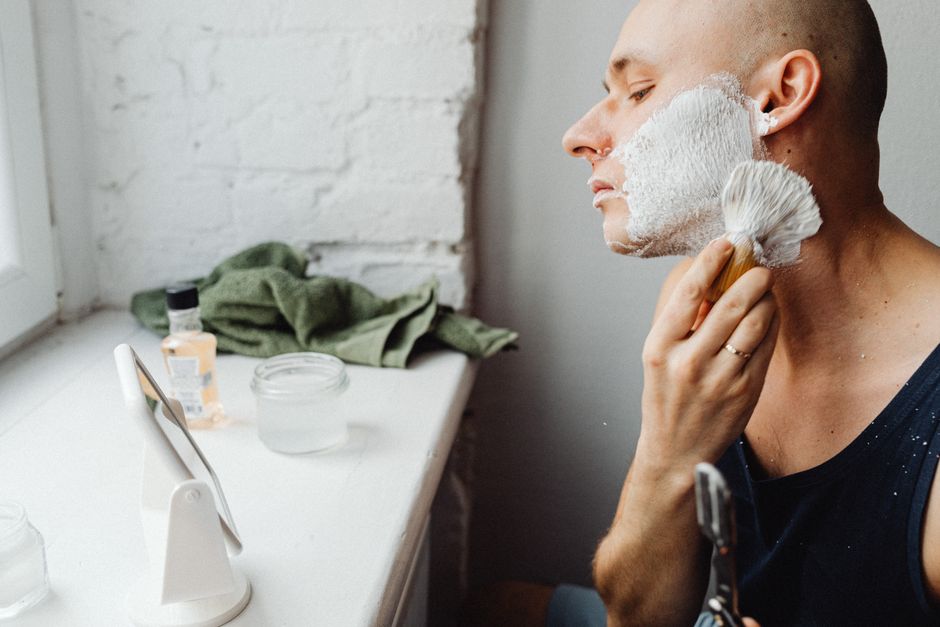
Men’s skin often faces two sources of stress at once: regular shaving and a buildup of oil, sweat, and dead skin cells. The safest routine uses controlled exfoliation, enough recovery time, and a clear stop rule when redness or stinging appears.
Why exfoliation irritates men’s skin
Dead skin is not the only issue
Exfoliation removes or loosens cells from the outer layer of the skin. That can make rough texture, blocked pores, and dull-looking skin less visible. The same process can cause trouble when it removes too much of the protective barrier. A weakened barrier loses water faster and lets ordinary products sting.
Men who shave have another risk. A razor already creates friction and removes some surface cells. Adding a strong acid or rough scrub immediately afterward can turn a normal grooming step into burning, tightness, or visible flaking.
Choose the type of exfoliant for the problem
Salicylic acid is oil-soluble, so it typically suits blackheads, oily skin, and clogged pores. Mandelic acid is a larger alpha hydroxy acid and often feels gentler than stronger acids. Physical scrubs remove surface buildup through friction, which makes pressure and particle size important.
The safest starting verdict
For most beginners, a rinse-off salicylic acid cleanser used once or twice a week is the best starting point. It gives the skin less contact time than a leave-on liquid and makes overuse easier to spot.
How often should men exfoliate their face?
A four-week starting schedule
- Week one: exfoliate once at night on a non-shaving day.
- Week two: repeat once or twice, leaving at least two recovery days between uses.
- Weeks three and four: stay at two sessions weekly if the skin feels normal. Do not increase the schedule just because the first use produced a smoother feel.
- After four weeks: adjust only one factor at a time, such as frequency or product strength.
What to do on an exfoliation night
Wash with lukewarm water, pat dry, and apply a thin layer of the chosen exfoliant. Follow with a plain moisturizer. Skip retinoids, strong vitamin C formulas, benzoyl peroxide, fragranced aftershave, and other acids that night. In the morning, use broad-spectrum sunscreen because exfoliated skin can react more strongly to sunlight.
When the schedule is too aggressive
Persistent tightness, shiny skin that feels dry, peeling around the nose, or burning from a basic moisturizer means the schedule is too strong. Stop exfoliating for at least one week and return to cleanser, moisturizer, and sunscreen. The correct verdict is simple: progress comes from tolerable repetition, not daily scraping.
Which exfoliation mistakes cause redness?
Shaving and exfoliating on the same day
This is the most common mistake. Shaving against the grain, using a dull blade, or pressing hard already increases irritation. Applying an acid afterward adds another stressor. Shave first, then wait at least 24 hours before testing a leave-on exfoliant. If the skin is still red or tender, wait longer.
Using a scrub as if pressure creates better results
It does not. A scrub works through contact with its particles, not through force. Two light passes over wet skin are enough. Avoid the eye area, active cuts, cold sores, and spots that have been picked. Walnut shells, coarse salt, and rough homemade mixtures are poor choices because their particles can create uneven friction.
Ignoring product overlap
A cleanser with salicylic acid, a leave-on BHA, and a retinoid can form an aggressive routine even when each product seems reasonable alone. Add only one exfoliating product at a time and keep a simple record of use. Stop if redness lasts into the next day, if the face feels hot, or if swelling develops. Severe or recurring irritation needs medical assessment rather than another product.
Men with eczema, rosacea, frequent dermatitis, or prescription acne treatment should ask a dermatologist before starting acids. The best purchase for a highly reactive face may be no exfoliant until the underlying condition is controlled.
Which exfoliant type is safest for men?
Compare the main options before buying
The table below uses US list prices available as reference points in 2026. Retail prices change, but the active ingredient, format, and contact time are more important than a small discount.
| Product | Type and size | Typical price | Best use | Verdict |
|---|---|---|---|---|
| CeraVe Renewing SA Cleanser | Salicylic acid cleanser, 8 oz | $15.99 | Beginner use and rough texture | Best first step for cautious users |
| Paula’s Choice Skin Perfecting 2% BHA Liquid Exfoliant | Leave-on BHA, 4 fl oz | $37 | Blackheads and oily pores | Best for persistent congestion |
| The Ordinary Mandelic Acid 10% + HA | Leave-on AHA serum, 30 ml | About $8 | Uneven texture and dry skin | Best low-cost acid for gradual use |
| Jack Black Face Buff Energizing Scrub | Bamboo physical scrub, 6 oz | $30 | Pre-shave surface smoothing | Useful only with very light pressure |
The clear buying decision
Buy CeraVe Renewing SA Cleanser if you have never exfoliated. Choose Paula’s Choice 2% BHA only when clogged pores are the main problem and your barrier already feels stable. Pick The Ordinary Mandelic Acid 10% + HA for a gentler leave-on approach to texture. Jack Black Face Buff is the least forgiving option, so it should not be the automatic choice for sensitive skin.
How should a man choose an exfoliant?
Is salicylic acid better for blackheads?
Yes, for most oily or congested faces. Salicylic acid can move through oil around the pore, making it a logical choice for blackheads. Paula’s Choice Skin Perfecting 2% BHA Liquid Exfoliant is the strongest pick in this group, but start once weekly rather than using it daily. CeraVe Renewing SA Cleanser is the safer purchase for a beginner because it rinses away.
Is an acid safer than a face scrub?
Usually, an acid gives more even coverage because the ingredient does not depend on how hard a person rubs. That does not make every acid gentle. The Ordinary Mandelic Acid 10% + HA is the better choice for gradual texture work, while Jack Black Face Buff makes sense only for someone who prefers a pre-shave scrub and can use almost no pressure.
When should a man buy nothing?
Do not buy an exfoliant to treat a rash, cracked skin, burning after shaving, or sudden acne that may be medication-related. Repair the basic routine first. A fragrance-free cleanser, moisturizer, and sunscreen can do more for a damaged barrier than a stronger treatment. If the face tolerates those basics for two weeks, add one exfoliant at the lowest practical frequency.
What is the best low-irritation routine by skin type?
For oily, dry, and sensitive skin
For oily skin with blackheads, Paula’s Choice 2% BHA is the best targeted option because its leave-on salicylic acid addresses congestion directly. Use it once at night each week, then increase to twice weekly only if the skin stays calm. For dry or uneven skin, The Ordinary Mandelic Acid 10% + HA is the better pick because its 10% mandelic acid format allows slow texture work without the roughness of a scrub. For sensitive skin, CeraVe Renewing SA Cleanser wins because short contact time limits exposure.
Final comparison
| Skin concern | Best choice | Starting frequency | Do not combine with |
|---|---|---|---|
| Blackheads and oily pores | Paula’s Choice 2% BHA | Once weekly | Other acids or retinoids that night |
| Dry, dull texture | The Ordinary Mandelic Acid 10% + HA | Once weekly | Scrubs and strong retinoids |
| Beginner or mildly rough skin | CeraVe Renewing SA Cleanser | One or two times weekly | Hard scrubbing |
| Pre-shave smoothing | Jack Black Face Buff | Up to twice weekly | Heavy pressure and same-day acids |