
Cold weather does not dry your face because your skin suddenly needs a thick layer of oil. Wind, indoor heating, hot showers, and low humidity pull water from the outer skin barrier. The right men’s moisturiser replaces that lost water, slows further moisture loss, and stays comfortable under a collar or scarf.
Why cold weather makes your face dry
Wind and heating strip water from the barrier
Winter skin usually starts with a damaged barrier, not a lack of effort. Cold air holds less moisture than warm air, while indoor heating lowers humidity even further. Wind adds friction and increases evaporation from exposed cheeks, lips, and the area around the nose. A long hot shower then removes some of the oils that help keep the barrier sealed.
This creates familiar signs: tightness after washing, flaky patches beside the mouth, rough skin on the cheeks, and stinging when you apply a normally gentle product. Shaving can make the problem worse because it removes surface cells and adds friction to already stressed skin.
The basic problem is water loss
Your moisturiser needs to handle two jobs. Humectants such as glycerin and hyaluronic acid pull water toward the outer skin layers. Occlusives and barrier-supporting ingredients such as petrolatum, dimethicone, ceramides, and fatty acids slow that water from escaping. The best winter routine uses both groups.
Verdict: choose a barrier-supporting moisturiser when your face feels tight or flaky; a richer texture matters more than a masculine label or a strong fragrance.
How to choose a moisturiser by skin type
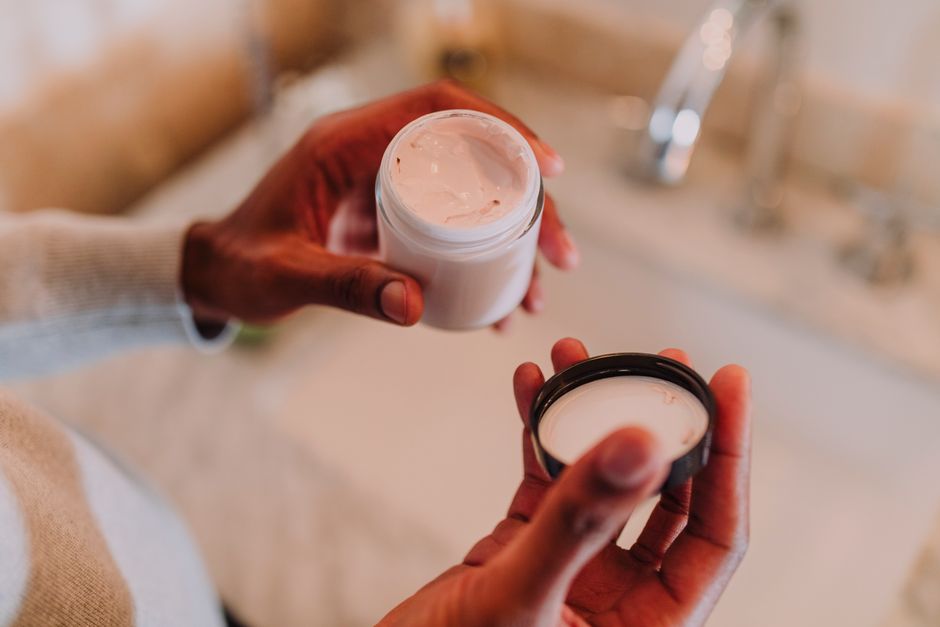
Choose a cream for dry or peeling skin
Dry skin needs more than a watery lotion. Look for glycerin, ceramides, squalane, shea butter, dimethicone, or petrolatum near the middle or top of the ingredient list. A cream that leaves a light protective film is useful at night and before a windy commute. Avoid judging the formula only by how quickly it disappears. Fast absorption can feel pleasant, but it does not always protect your cheeks for eight hours.
Choose a lotion for combination or oily skin
If your forehead becomes shiny while your cheeks flake, start with a lighter lotion and apply extra product only to dry zones. Niacinamide can support the barrier and help reduce the look of excess oil, but high concentrations may sting irritated skin. Fragrance-free formulas are the safer starting point after shaving.
Match the moisturiser to your routine
For daytime, choose a product that sits cleanly under sunscreen. Jack Black Double-Duty Face Moisturiser SPF 20 costs about $32 for 3.3 ounces and suits men who want a moisturiser with built-in low daily sun protection, but SPF 20 is not enough for long outdoor exposure. For very dry nights, a plain cream works better than a heavily scented aftershave balm.
Verdict: dry skin gets a cream, combination skin gets a lotion, and sensitive skin starts with a fragrance-free formula before adding anything more complex.
How to apply moisturiser in three winter steps
Step 1: Wash with lukewarm water
Clean your face once at night and after heavy sweating. In the morning, rinse with lukewarm water if your skin feels dry. Use your fingertips rather than a rough cloth, and keep the water below the temperature that turns your face red. Pat with a towel so the skin stays slightly damp.
Step 2: Apply the right amount
- Use a nickel-sized amount for your face and neck.
- Spread it across the forehead, cheeks, nose, jaw, and neck within one minute of washing.
- Press the product into flaky areas instead of rubbing them repeatedly.
- Wait two minutes before sunscreen or a shirt collar if the finish feels slippery.
Step 3: Adjust at night
Use one layer after washing. Add a second thin layer to the cheeks, corners of the nose, or lower lip if those areas still feel tight after ten minutes. Do not cover the entire face with a thick coat automatically. That can feel greasy, transfer onto bedding, and cause blocked pores for some people.
Verdict: application timing matters as much as the formula; apply moisturiser to damp skin, then add a targeted second layer only where winter has caused dryness.
Which men’s moisturisers are worth buying in 2026?

Prices vary by retailer, but these common US prices show the real trade-offs. The winner for most dry, irritated winter faces is Vanicream because it keeps the formula simple and costs less than many branded creams.
| Product | Size and approximate price | Best use | Trade-off |
|---|---|---|---|
| Vanicream Daily Facial Moisturiser | 3 oz, about $14 | Sensitive or dry skin | Plain finish and limited luxury feel |
| CeraVe Moisturising Cream | 19 oz, about $19 | Very dry skin and face-body use | Rich texture can feel heavy on oily skin |
| La Roche-Posay Toleriane Double Repair | 2.5 oz, about $25 | Daily barrier support | Higher cost per ounce |
| Kiehl’s Ultra Facial Cream | 1.7 oz, about $38 | Normal skin wanting a lighter cream | Price does not guarantee better results |
| Jack Black Double-Duty Face Moisturiser SPF 20 | 3.3 oz, about $32 | Simple morning routine | Needs higher SPF outdoors |
Best value for damaged winter skin
Pick Vanicream Daily Facial Moisturiser if your face burns after shaving or reacts to scented grooming products. Pick CeraVe Moisturising Cream if your cheeks are cracking and you also need a body cream. CeraVe offers ceramides and a large 19-ounce tub, so it gives the strongest cost-per-ounce value.
Best lighter daily option
Pick La Roche-Posay Toleriane Double Repair when you want a face-specific lotion that feels less dense than CeraVe. Pick Kiehl’s Ultra Facial Cream only when its texture makes you more likely to apply it every day; the higher price does not make it a better barrier repair product.
Verdict: Vanicream is the best winter buy for sensitive skin, CeraVe wins for severe dryness and value, and Jack Black wins only for a quick morning routine.
Five winter skincare mistakes to avoid
Do not scrub flakes away
- Do not use a face scrub on peeling skin. Scrubbing removes more surface cells while the barrier is already weak.
- Do not switch to very hot water because it feels soothing. The relief lasts minutes, while the dryness can last all day.
- Do not apply aftershave containing alcohol to cracked areas. Stinging is not proof that a product is working.
Do not overbuy based on packaging
- Do not pay extra for a men’s label when an unscented pharmacy cream solves the problem.
- Do not treat a tingling sensation as a sign of strong performance.
- Do not apply three new products at once. If your face reacts, you will not know which product caused it.
Know when to stop self-treating
Deep cracks, yellow crusting, spreading redness, swelling, or painful itching need medical advice rather than a thicker cream. Stop any product that causes persistent burning. Patch-test a new moisturiser on the side of your neck for two days before using it across your face.
Verdict: the biggest winter mistake is adding more products to an irritated barrier; simplify the routine first.
Cold-weather moisturiser questions, answered
Should men use moisturiser after every shower?
Apply it after washing your face, not automatically after every full-body shower. If the shower leaves your face tight, use moisturiser within one minute of drying. A damp surface helps spread the product evenly and reduces the amount needed.
Can a moisturiser replace sunscreen?
Only a moisturiser with a tested SPF rating provides sun protection, and low SPF is not enough for skiing, hiking, or long outdoor commutes. Use a dedicated broad-spectrum SPF 30 or higher when your face will see strong daylight. Winter clouds do not remove ultraviolet exposure.
Why does moisturiser sting after shaving?
Shaving can create tiny cuts and expose sensitive skin. Fragrance, alcohol, acids, or a high-strength active ingredient may sting those areas. Rinse with cool water, use a bland fragrance-free cream, and wait until the skin settles before adding exfoliating products.
When should you not buy a richer cream?
Skip a heavy cream if it causes repeated blocked pores, greasy shine, or small bumps across the forehead. Use a lighter lotion on oily areas and reserve a richer product for the cheeks. The correct winter moisturiser should protect the skin without making you avoid the routine.
Verdict: a thicker cream is useful for dry cheeks, but it is the wrong purchase when it makes oily areas congested or causes burning.
The simplest final choice for cold-weather skin
For dry, sensitive winter skin, buy Vanicream Daily Facial Moisturiser and use it on damp skin after a gentle wash; its simple formula and roughly $14 price make it the safest first choice for most men. For severe dryness across your face and body, choose CeraVe Moisturising Cream because the 19-ounce tub delivers ceramides and strong value, even though the finish is richer. For normal skin that wants a lighter feel, choose La Roche-Posay Toleriane Double Repair, while Jack Black Double-Duty Face Moisturiser SPF 20 is the convenient morning pick only when you still add stronger sunscreen for outdoor time. Do not buy Kiehl’s Ultra Facial Cream expecting a higher price to repair a damaged barrier faster; choose it only if its lighter texture keeps you consistent.
The single most important takeaway is this: for cold-weather skin, choose a fragrance-free moisturiser with barrier-supporting ingredients and apply it to damp skin before winter dryness turns into cracking.