
A capsule wardrobe is about combinations, not owning less
The common mistake is treating a capsule wardrobe as a small pile of fashionable clothes. That misses the point. A useful capsule is a limited system in which each piece works with several others, so getting dressed takes less thought and fewer compromises.
The real problem is outfit friction
Most men do not lack clothing. They lack connections between their clothing. A navy coat looks fine, but not if it only works with one pair of trousers. A patterned knit may be attractive on its own, but it becomes dead weight when it clashes with every shoe and outer layer. A strong autumn capsule removes these dead ends. Each item earns its place by creating multiple complete outfits.
Six pieces can cover most autumn days
Start with one coat, two knits, one pair of trousers, one pair of shoes, and one simple base layer such as a plain shirt or heavyweight T-shirt. That gives you enough warmth for mild and cool days without filling a wardrobe with near-duplicates. The goal for autumn 2026 is not a trend uniform. It is a repeatable set of outfits that works for commuting, dinners, weekends, and ordinary wet weather. If a piece only works in one carefully staged look, skip it.
Use five colors so every piece can meet another

A small palette does more work than extra clothing. Choose one dark anchor, one light neutral, two autumn colors, and a controlled accent. The exact shades can change, but the relationships should stay stable. Navy, charcoal, cream, olive, and rust are a strong starting point because they create contrast without making every outfit look loud.
The five-color system
| Color role | Best choices | Use it on | Why it works |
|---|---|---|---|
| Dark anchor | Navy or charcoal | Coat or trousers | Grounds the outfit |
| Light neutral | Oatmeal or cream | First knit or shirt | Stops dark layers looking heavy |
| Earth tone | Olive or brown | Second knit or trousers | Adds depth without shouting |
| Warm accent | Rust or burgundy | One knit or small detail | Gives autumn character |
| Leather neutral | Dark brown or black | Shoes and belt | Connects the lower half |
Keep contrast deliberate
Do not wear five equal-strength colors at once. Let one shade lead, one support, and the rest stay quiet. A charcoal coat, cream knit, olive trousers, and dark brown shoes already has enough information. Add rust only when the outfit needs warmth. This palette also makes laundry and packing easier because replacement pieces can join without forcing a new color scheme.
Build the capsule in this order
Buy in the order that exposes mistakes fastest. Starting with accessories or statement knitwear feels fun, but it leaves the core wardrobe unresolved. The coat, trousers, and shoes control most of the outfit. Solve those first.
Use this six-step sequence
- Choose the coat. Pick a dark neutral with enough room for a knit underneath. A mid-thigh length is more useful than a short jacket for work and weekend wear.
- Choose the trousers. Use a straight or softly tapered leg in a color that contrasts with the coat. Avoid a near-match that looks accidental.
- Choose the everyday shoes. Brown or black leather gives the capsule a clear base. The shape should handle walking, not only photographs.
- Add the lighter knit. Cream, oatmeal, or light grey brightens the dark outer layer.
- Add the darker knit. Olive, navy, brown, or burgundy creates a second outfit mood without adding a new category.
- Test every combination. Lay the pieces together. If one item creates fewer than three complete outfits, replace it before buying anything else.
Use the three-outfit test
Each new piece must work with the coat, trousers, and shoes in at least three combinations. The first outfit can be obvious. The second should change the knit or shirt. The third should change the contrast or texture. This test catches attractive mistakes early. A pale trouser that only works with one shoe, or a bulky knit that cannot fit under the coat, fails before it reaches your wardrobe.
Fit checkpoints matter more than the label
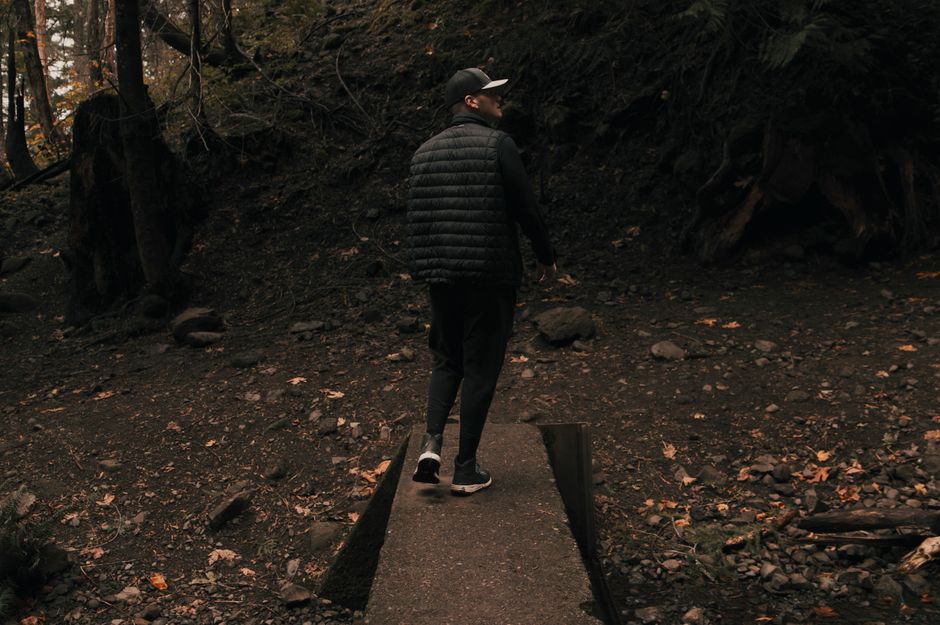
Fit is the part of menswear that turns a basic capsule into a sharp one. You do not need a designer cut. You need clean proportions, enough movement, and garments that sit in the right places. Sizing labels are inconsistent, so judge the garment on your body rather than trusting the number printed inside it.
Check the coat from the shoulders down
The shoulder seam should sit close to the edge of your shoulder without dropping several centimetres. Button the coat over your thickest knit. You should be able to cross your arms and reach forward without the back pulling tight. The sleeve should finish near the wrist bone, leaving little or no shirt cuff when your arms hang naturally. The hem should cover the seat and give a long, clean line. A coat that stops at the belt usually looks casual; that can work, but it will not replace a proper outer layer.
Check knits and trousers while moving
A knit should skim the torso, not cling to it and not balloon around the waist. The shoulder seam should stay near the shoulder point. For trousers, the waistband should sit securely without a belt doing all the work. The rise should let you sit without pulling at the front. Aim for a small break at the shoe, or no break with a cleaner modern hem. The leg should fall straight from hip to ankle. Excess fabric around the ankle makes even good shoes look clumsy. Move, sit, raise your arms, and walk before deciding. Static mirror checks miss the fit problems that appear during a normal day.
Skip these purchases when the capsule starts to drift

Skip novelty before you have coverage. Autumn style gets expensive when every piece announces itself. A loud check, cropped coat, unusual sole, or oversized sleeve can look excellent in isolation and still fail the wardrobe test.
Common mistakes to remove
- Two coats with the same job: Buying black and navy outerwear before adding a lighter knit creates duplication, not range.
- Extreme fits: Super-slim trousers and very oversized knits fight each other and date the outfit quickly.
- Thin winter-looking fabrics: A flimsy coat may resemble wool but will not layer well or block much wind.
- Too many warm colors: Rust, mustard, camel, and orange together turn the palette muddy. Pick one.
- Dress shoes for daily walking: Hard soles and narrow toes become a practical failure, even if the shoes look polished.
Know when not to buy
Do not buy a coat that only fits over a T-shirt. Do not buy trousers that need constant pressing if you will wear them three days a week. Do not buy a knit that pills heavily after a short try-on or sheds fibers onto every dark layer. The best capsule piece is not the most impressive item in the store. It is the one you can wear next week, with at least three existing pieces, without repairing the outfit around it.
Care keeps a small wardrobe from wearing out
A six-piece capsule receives more use than a large wardrobe, so careless washing will destroy it faster. Care is part of the buying decision, not a chore added later.
How should you wash the pieces?
Air wool and cashmere after each wear instead of washing them automatically. Fold knits flat; hanging stretches the shoulders. Wash them inside out in cool water with a gentle detergent, then press out water without twisting. Dry them flat away from direct heat. Wash denim less often, spot-cleaning small marks and airing it between wears. When it needs a full wash, turn it inside out and use cold water. Follow the care label when it gives a stricter instruction.
How do you protect the coat and shoes?
Use a broad hanger for the coat and empty its pockets before storing it. Brush surface dirt from wool rather than scrubbing it into the fibers. Let leather shoes dry naturally if they get wet. Never place them against a radiator. Use shoe trees when possible, then condition smooth leather a few times each season. Suede needs a dry brush and a protector made for suede, not ordinary polish. Rotate shoes for a day of rest when your schedule allows. Small habits prevent stretched knits, shiny trousers, cracked leather, and a coat that loses its shape before the season is over.