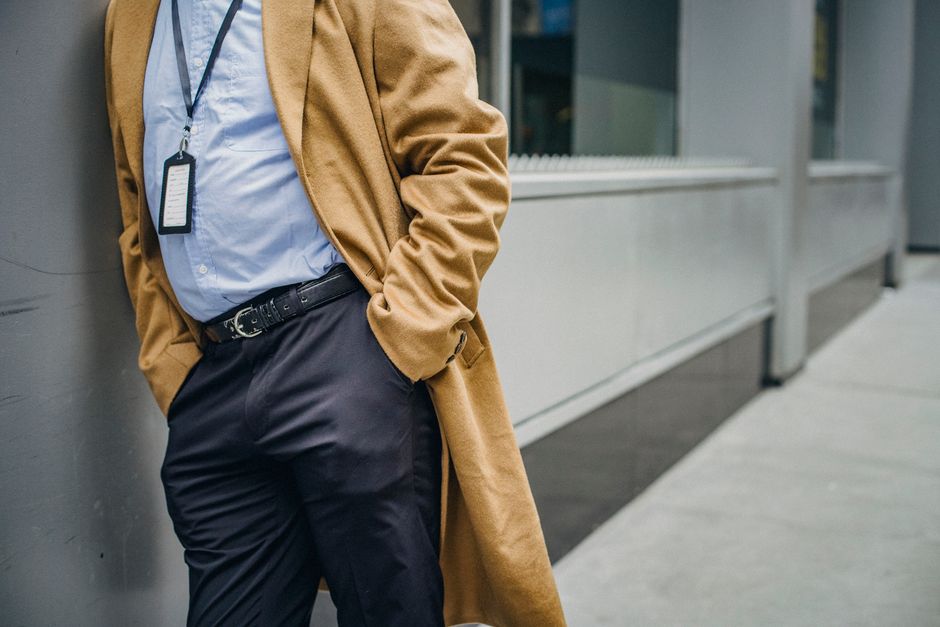
Spring showers create a narrow styling problem: you need protection from rain, but not the heavy layers or padded shape that make an outfit look like winter. A men’s trench coat solves that problem when you treat it as a light outer shell, not a substitute for a waterproof hiking jacket.
How should a men’s trench coat fit over spring layers?
Choose a trench that fits over one useful layer, not your entire winter wardrobe. The best spring fit leaves room for a shirt and a thin knit while keeping the shoulder line clean. A coat that fits perfectly over a T-shirt may pull across the back when you add a merino sweater, while a coat bought two sizes too large can turn a sharp silhouette into a wet, noisy tent.
Check the shoulders, sleeves, and hem first
Stand naturally with your arms at your sides. The shoulder seam should sit close to the point of your shoulder, or the raglan sleeve should fall without creating a deep fold under the arm. Raise both arms to reach for a train strap. The coat should move with you without lifting above your wrists. For sleeve length, aim for the wrist bone or slightly beyond it; a shirt cuff can show by about 1 centimetre, but bare forearms suggest that the coat is too short.
A mid-thigh hem works best for everyday spring wear. It covers a shirt and most of a blazer without trapping too much heat. A knee-length trench gives stronger rain coverage, but it can look formal with sneakers and feel cumbersome on a bicycle. If you commute on foot, choose a back vent that opens freely and a hem that does not catch around your knees.
Use the waist belt to shape the coat, not squeeze yourself
For a clean city outfit, fasten the belt with a loose knot at the front or tie it behind your back. Pulling it tight creates folds around the stomach and makes the shoulders look wider than they are. When rain becomes heavier, close the buttons, fasten the throat latch, and tighten the cuffs before tightening the waist. Those details block wind more effectively than a hard belt cinch.
The most common mistake is buying a slim trench that leaves no room for a knit. The second is buying a very oversized coat because the model photographs well in a suit. Test your intended spring layer in the changing room, then sit down, lift your arms, and reach into both pockets before you decide.
How do you build a rain-ready trench coat outfit?
Start with a dry, breathable base and let the trench handle the wind and light rain. A spring outfit works because each layer has a clear job. The shirt manages comfort, the middle layer adds warmth, and the trench blocks the weather. Adding more fabric at random only creates bulk.
Follow this five-step layering order
- Base layer: Wear a cotton Oxford shirt, merino polo, or lightweight long-sleeve T-shirt. Avoid thick thermal fabric unless the temperature sits below 10°C.
- Warmth layer: Add a fine-gauge merino crewneck or cardigan between 150 and 250 grams. It warms the torso without filling the sleeves.
- Trench: Keep the coat open during a dry spell. Button it from the middle upward when rain starts, then use the throat latch only when wind reaches your neck.
- Trousers: Choose straight-leg chinos, dark denim, or lightweight wool trousers. A narrow ankle opening lets water run onto the shoe, so leave roughly 18 to 21 centimetres at the hem for a balanced break.
- Shoes: Pick leather derbies, plain-toe boots, or treated suede loafers for light showers. Dry the shoes at room temperature after wearing them; direct heat can crack leather and warp glue.
Keep the colors simple when the coat has strong details
Honey beige looks best with navy, charcoal, olive, white, and dark brown. Black works with grey, cream, denim, and muted green. Limit the outfit to three main colors so the storm flaps, belt, and metal hardware do not compete with a loud shirt or patterned trousers. A dark umbrella and a plain leather bag finish the look without turning it into a costume.
Skip a bulky hoodie under a classic trench unless the coat has a relaxed cut and enough shoulder room. The hood bunches under the collar, pushes the lapels outward, and often holds rainwater against the neck. A thin zip cardigan gives the same casual effect with a cleaner line.
Can a cotton trench coat handle a spring shower?
Does shower-resistant mean waterproof?
No. A tightly woven cotton gabardine trench can repel light rain for a short walk, but it will not replace a sealed rain shell during a long downpour. Water eventually reaches the fabric, especially at the shoulders, sleeve seams, and collar. Read the care label before applying any spray because the wrong product can darken the cloth or affect its finish.
Should you close every button when rain starts?
Close the front when wind pushes rain toward your chest, but do not fasten every detail automatically. Button the coat, tighten the cuffs, and raise the collar first. Use the belt loosely so the fabric can move. In warm rain, an open front with a compact umbrella may feel cooler and prevent sweat from building inside the coat.
What should you do when the trench gets wet?
Shake off surface water, hang the coat on a broad hanger, and let it dry in a room with normal airflow. Do not put it over a radiator or tumble-dry it. Empty the pockets so the wet lining does not stretch, and brush away dried dirt after the fabric dries. If the coat becomes soaked, use a professional cleaner that handles the garment’s fabric and construction.
The key distinction is simple: a trench suits short showers, damp commutes, and windy streets. It fails when the forecast calls for hours of heavy rain. For that weather, a technical shell with taped seams is the honest choice, even if it looks less polished.
Which men’s trench coats are worth comparing in 2026?

Prices vary by country, sale timing, and stock, so use the figures below as useful reference points rather than permanent retail promises. The comparison also shows why a higher price does not automatically mean better performance in every spring shower.
| Model | Listed price | Useful specification | Best use |
|---|---|---|---|
| Burberry Long Kensington Heritage Trench Coat | $2,850 | Shower-resistant cotton gabardine, classic fit, structured shoulders | Best for a traditional dressy wardrobe |
| Mackintosh Blanefield Gabardine Double-Breasted Trench Coat | About £1,195 | Gabardine construction, double-breasted front, tailored silhouette | Best for understated British styling |
| Uniqlo U Single-Breasted Trench Coat | $49.90 listed sale price | 70% cotton and 30% nylon shell, relaxed A-line fit, raglan sleeves | Best low-cost option for light showers |
What the comparison reveals
The Burberry offers the strongest heritage shape and the clearest choice for a formal wardrobe, but its $2,850 price buys craftsmanship and brand history more than complete rain protection. The Mackintosh sits between fashion and weather resistance, with a quieter look that works well over office clothes. The Uniqlo U model wins on price and ease, although its light fabric and relaxed cut suit short showers rather than severe weather.
My clear pick for most readers
For a first trench, choose the Mackintosh style if you want a long-term smart coat and can afford the price; choose the Uniqlo U model if you need a low-risk spring layer. The Burberry Kensington is the best luxury choice, not the best rain jacket.
When should you skip the trench coat?
Skip the trench when the weather demands sealed protection, not polished coverage. If the forecast shows sustained heavy rain, strong gusts, or temperatures below 8°C, a waterproof shell or insulated parka will keep you more comfortable and protect your clothes more reliably. A trench also makes little sense for cycling in hard rain, long outdoor events, muddy walks, or any situation where you cannot dry the coat afterward, because cotton-based fabric can become heavy and cold when saturated.
For an ordinary spring commute, the winning formula is much simpler: wear a thin breathable layer, leave enough room at the shoulders, keep the hem around mid-thigh, fasten the cuffs before the waist, and pair the coat with shoes that can handle wet pavement. That gives you the trench’s main advantage—a sharp outline with useful wind and shower coverage—without pretending that a classic coat can do the job of technical rain gear.
Wear it open when the street is merely damp, button it when the rain turns steady, and replace it with a real waterproof shell when the forecast crosses that line. The best spring trench outfit is the one that keeps its shape, keeps you comfortable, and matches the limits of the fabric.