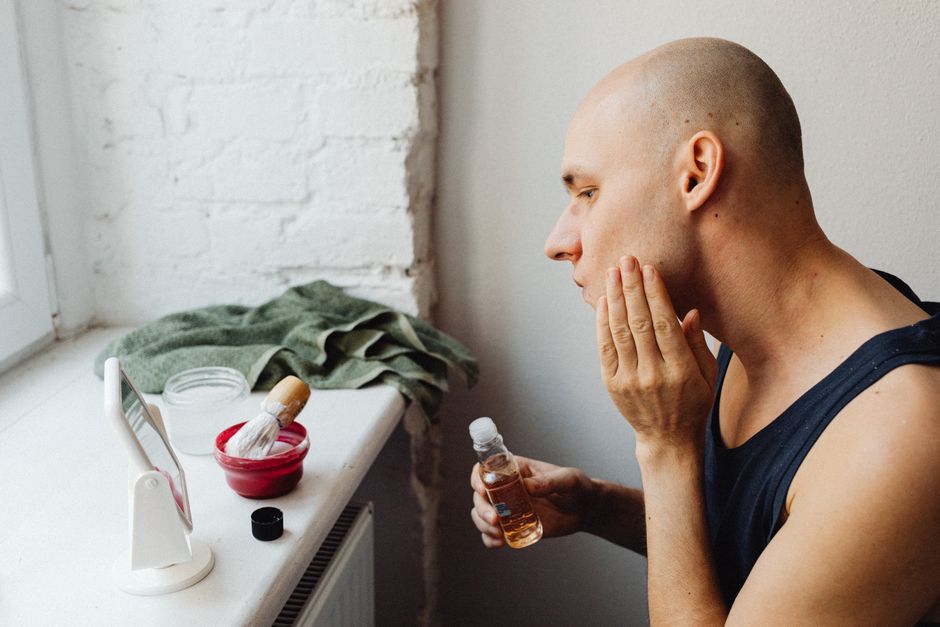
Why Autumn Makes Men’s Lips Crack
The best autumn lip-care strategy is barrier protection. Your lips have thinner skin than most of your face and produce very little natural oil. Cold air pulls water from that surface. Wind removes the remaining protective layer, while indoor heating lowers humidity and keeps the drying cycle going.
Cold air attacks the lip barrier
Chapped lips start when water escapes faster than the skin can replace it. Small cracks then form, especially at the center of the lower lip and the corners of the mouth. Licking your lips gives brief relief, but saliva evaporates quickly and leaves the surface drier than before. Breathing through your mouth during exercise, a cold, or nasal congestion adds more moisture loss.
The autumn triggers to control
| Trigger | What it does | Best response |
|---|---|---|
| Cold wind | Strips surface oils | Apply a protective balm before going outside |
| Indoor heating | Dries room air | Keep bedroom humidity near 40% to 50% |
| Lip licking | Increases evaporation | Use balm instead of saliva |
| Sun exposure | Damages exposed lip skin | Use an SPF lip product during daytime |
| Dehydration | Reduces available skin moisture | Drink regularly, especially with exercise |
Fixing these triggers matters more than buying a stronger-smelling balm. If the cause stays in place, even a good product will only provide temporary comfort.
How to Repair Chapped Lips in 48 Hours
Stop treating cracked lips like a cosmetic problem. They need a short repair routine that protects the damaged surface while giving it time to close. Most mild cases improve within two days when you remove friction, moisture loss, and irritating ingredients.
Use this repair sequence
- Rinse your lips with lukewarm water and pat them dry. Do not scrub off flakes.
- Apply a plain, fragrance-free occlusive layer within one minute of drying.
- Repeat the application after eating, drinking, brushing your teeth, and showering.
- Cover your mouth with a scarf in cold wind instead of rubbing or licking your lips.
- Apply a thick layer before bed so the surface stays protected overnight.
What to remove during the repair window
Pause minty, tingling, flavored, and strongly scented products for 48 hours. Menthol, camphor, peppermint oil, cinnamon flavor, and some cooling agents can make damaged lips sting. That sensation does not prove the product is working. It can mean the formula is irritating already cracked skin.
Do not pull loose skin with your teeth or use a sugar scrub. Both actions reopen tiny breaks and extend the healing time. If the corners split, keep the area clean and dry between applications rather than repeatedly licking it.
When the routine should work
Mild tightness usually improves first. Flaking and small cracks should look calmer within 48 hours. Deep bleeding, spreading redness, pus, fever, or painful blisters need medical attention because balm alone will not address an infection or cold sore.
Which Lip Balm Ingredients Work for Men
Choose the least exciting formula that solves the problem. Petrolatum, mineral oil, dimethicone, shea butter, and ceramides reduce water loss. SPF matters for daytime outdoor use because lips receive ultraviolet exposure in autumn too, especially at high altitude or around reflective surfaces.
Useful formulas and typical prices
| Product | Key detail | Typical US price | Best use |
|---|---|---|---|
| Aquaphor Lip Repair | 0.35 oz tube; fragrance-free barrier formula | About $5 | Cracked, sensitive lips |
| Jack Black Intense Therapy Lip Balm SPF 25 | 0.25 oz tube; SPF 25 | About $10 | Outdoor daytime protection |
| Burt’s Bees Beeswax Lip Balm | 0.15 oz stick; beeswax and peppermint flavor | About $4 | Normal lips that tolerate mint |
| NIVEA Men Active Care | 0.17 oz stick; basic daily moisture | About $4 | Low-cost everyday use |
| Carmex Classic Stick | 0.15 oz stick; cooling menthol-style feel | About $3 | Short-term comfort for tolerant skin |
My clear picks by situation
For already cracked or sensitive lips, Aquaphor Lip Repair is the strongest choice because its plain barrier focus reduces the chance of extra irritation. For hiking, commuting, or outdoor sports, Jack Black Intense Therapy Lip Balm SPF 25 wins because it combines moisture protection with a higher SPF. Burt’s Bees, NIVEA Men, and Carmex make sense only when your lips tolerate their flavoring or cooling ingredients. A product that tingles, burns, or causes more peeling is the wrong product for you, even if it feels refreshing.
The 5-Minute Autumn Lip Routine for Men

A two-product routine is enough for most men. Use one plain barrier balm at night and one SPF balm during the day. Adding five layers of skincare creates more chances for fragrance, flavor, or rubbing to irritate the area.
Morning and daytime steps
- After washing your face, pat your lips dry instead of dragging a towel across them.
- Apply a thin layer of SPF 15 or higher before leaving home.
- Reapply after lunch, coffee, exercise, or two hours outdoors.
- Cover your lower face with a scarf when wind makes your lips feel tight.
Night repair steps
- Remove food and sunscreen with lukewarm water.
- Wait until the lips are dry, then apply a thicker layer of a plain occlusive balm.
- Keep the tube beside your bed so the step happens every night.
The best routine is the one you repeat. Do not chase a glossy finish or a strong flavor. A small, fragrance-free tube in your jacket pocket and a second one beside your toothbrush solve the main practical problem: forgetting to protect your lips before they hurt.
Lip Balm Mistakes That Keep Lips Dry
Most stubborn chapping comes from a routine error, not a lack of products. These questions cover the mistakes that waste the most time.
Should you peel flaky skin off?
No. Peeling removes the thin new layer underneath and can create bleeding cracks. Let the flakes loosen naturally after several applications of balm. If a flap catches on clothing, trim only the loose edge with clean scissors; never bite it off.
Why does my lip balm make my lips worse?
Flavor and cooling ingredients are common causes. Menthol, camphor, peppermint, cinnamon, and fragrance can sting damaged skin. Beeswax itself is fine for many people, but a flavored beeswax formula may still cause trouble. Stop one product for a week and use a plain, fragrance-free alternative. If the redness fades, the old balm was a likely trigger.
Is licking your lips really that harmful?
Yes, especially in cold weather. Saliva contains enzymes meant to break down food, and its water evaporates quickly from the lip surface. The repeated wet-dry cycle leaves the barrier weaker. Keep a balm within reach at your desk, in your car, and in your coat so the replacement action is easy.
Can toothpaste cause chapped lips?
It can. Strong flavor oils and foaming agents may irritate the skin around the mouth. If chapping appeared after changing toothpaste, switch back or test a mild, unflavored formula for two weeks. Rinse the skin around your mouth after brushing and apply balm once it is dry.
When Chapped Lips Need More Than Balm

Give a simple routine seven to ten days, then stop guessing. If your lips do not improve, the cause may be contact irritation, eczema, a medication side effect, dehydration, or an infection rather than ordinary autumn dryness.
Signs to book a medical check
See a clinician if cracks keep returning in the same place, the corners stay split, the skin develops a persistent rash, or swelling and pain increase. Yellow crusting, pus, warmth, fever, or redness spreading beyond the lips can signal infection. Small groups of painful fluid-filled blisters may point to a cold sore and need different care.
When not to keep buying new balms
Stop product-hopping when every formula causes burning or peeling. That pattern suggests irritation or allergy, and another scented stick may make the problem harder to identify. Use a plain barrier product, remove new mouth and skincare products one at a time, and ask a pharmacist or clinician for advice if symptoms continue.
Autumn lip care is becoming less about carrying a fashionable balm and more about reading the barrier problem correctly. Protect the surface before wind exposure, keep the routine simple, and treat persistent symptoms as a health clue rather than a shopping problem.