
How do you wear a scarf with a winter coat without looking bulky, careless, or like you borrowed someone else’s outfit? The problem usually appears on a cold morning: your coat is buttoned, your collar is raised, and the scarf creates a thick lump under your chin. Leave it loose and the wind cuts through your neck. Tie it tightly and the whole outfit looks crowded.
The fix is not a complicated knot. It is matching the scarf’s shape, length, and wrapping method to the coat. A long wool scarf can look sharp with a clean drape, while a compact cashmere scarf works better in a Parisian loop. These four men’s scarf styles cover office coats, casual parkas, peacoats, and long overcoats without turning warmth into visual clutter.
Which scarf style suits each winter coat?
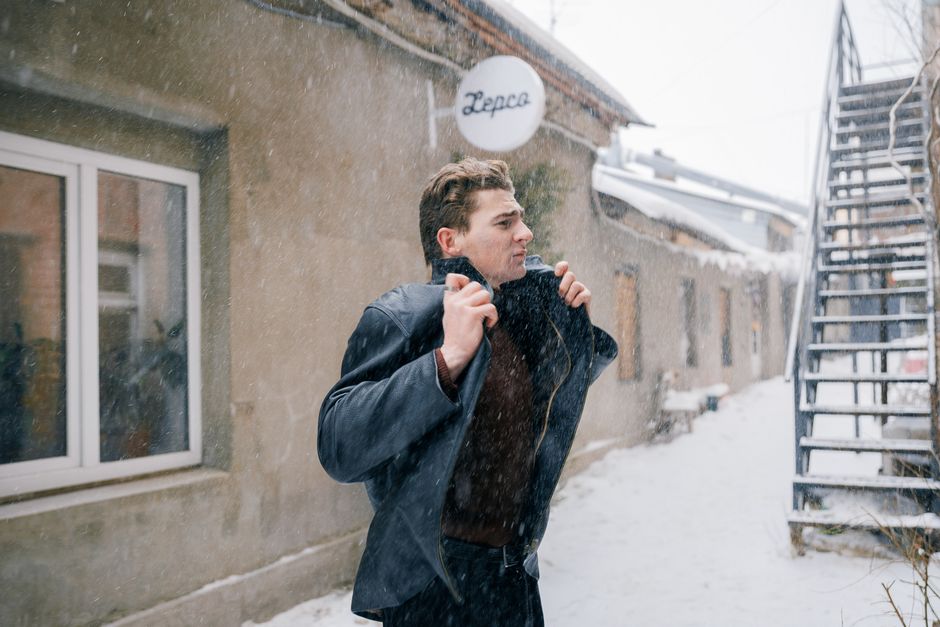
The best scarf style depends on the coat’s collar, front opening, and how much wind protection you need. Use this table as a quick starting point, then adjust the wrap so the fabric stays flat against the body.
| Winter coat | Best scarf style | Why it works | Avoid |
|---|---|---|---|
| Single-breasted wool overcoat | Clean drape | Follows the coat’s long vertical lines and keeps lapels visible | A thick knot under the chin |
| Peacoat | Single wrap | Adds warmth while balancing the wide double-breasted front | Very short scarves with tiny tails |
| Casual parka | Parisian loop | Stays secure during walking and fills the open collar | Loose draping in strong wind |
| Puffer jacket | Tucked double wrap | Keeps the scarf compact and prevents extra bulk over the insulation | Oversized cable-knit scarves |
| Long topcoat | Single wrap with even tails | Creates a controlled vertical line from neck to hem | Uneven tails that stop at different heights |
The collar test
Put the coat on before you wrap the scarf. If the scarf pushes the collar outward, reduce the number of layers. If cold air enters from both sides of the neck, choose a closer wrap instead of simply buying a thicker scarf. This small test prevents the common mistake of solving a fit problem with extra fabric.
The movement test
Turn your head left and right, sit down, and place one hand inside the coat. The scarf should stay near the neck without pressing against your throat or catching on the coat’s zip and buttons. For daily commuting, the winner is the style that stays in place after ten minutes of movement, not the one that looks perfect while standing still.
Verdict: use a drape for tailored coats, a single wrap for peacoats, a Parisian loop for open casual collars, and a compact double wrap for insulated jackets.
How do you wear one scarf four different ways?
Once the scarf shape fits the coat, the technique becomes easy. The following four styles cover most winter situations. The 2026 price snapshots below show what each fabric level can cost, but the wrapping rules work with any scarf of a similar size.
-
Clean drape for an overcoat
Place the scarf around the back of your neck and let both ends fall evenly over the front. Keep the scarf outside the coat if the coat is open, or tuck both ends inside if you button it. This is the sharpest option for a charcoal or navy topcoat because it preserves the lapel line and adds color without creating a knot. A J.Crew Cashmere Scarf in Plaid, listed at $128, has enough length for this style and enough pattern to brighten a plain coat. Choose this method for offices, dinners, and mild winter days.
-
Single wrap for a peacoat
Place the middle of the scarf at the front of your neck, cross the ends behind your neck, and bring them back to the front. Let the ends sit at similar lengths, then flatten the fabric across the chest. The Barbour Tartan Lambswool Scarf, listed at $65 and made from 100% wool, suits this style because its moderate thickness adds warmth without overwhelming a peacoat’s broad front. The clear verdict is Barbour for casual heritage coats and weekend wear.
-
Parisian loop for a parka or casual coat
Fold the scarf in half, place the folded loop on one side of your neck, pass the loose ends around the other side, and pull them through the loop. Do not tighten it directly under your jaw. Leave a small amount of space so the scarf sits comfortably inside the coat’s collar. For a softer, more refined version, the Johnstons of Elgin Fringed Cashmere Scarf costs about $395, measures roughly 180 by 30 centimetres, and uses 100% cashmere. It is the best pick when you want maximum softness with a light, controlled knot.
-
Tucked double wrap for a puffer
Wrap the scarf once around your neck, cross the ends in front, then tuck both ends under the wrapped section. Keep the layers flat rather than pulling them into a thick roll. A Brooks Brothers Cashmere Fringed Scarf, listed around $199.99 on sale from a $398 reference price, works well here because cashmere supplies warmth without the thickness of a heavy cable knit. Pick this approach when warmth matters more than visible scarf tails.
Do not buy the most expensive scarf simply because it feels soft in a shop. A large cashmere scarf can still look wrong with a short puffer, while a less expensive lambswool scarf may look better with a structured wool coat. The product verdict is clear: choose J.Crew for a versatile patterned dress scarf, Barbour for practical wool, Johnstons of Elgin for luxury softness, and Brooks Brothers when you want a compact cashmere layer.
What is the best scarf style for a clean, masculine look?
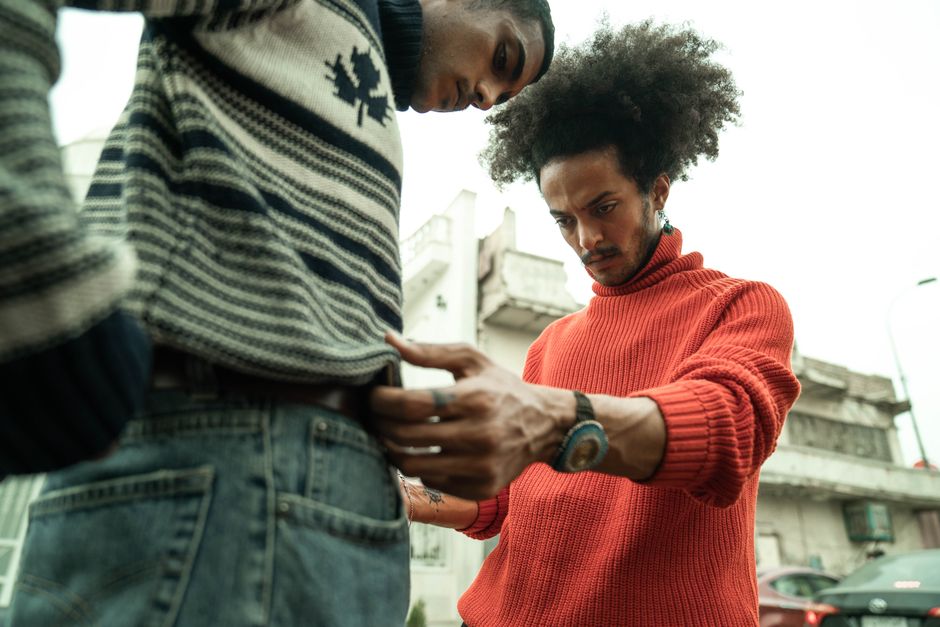
The clean drape is the best overall style for a winter coat. It creates the longest visual line, leaves the collar visible, and avoids the tight knot that makes many outfits look overworked.
Use the single wrap when the temperature drops or the coat has a broad front. Use the Parisian loop when wind keeps moving the scarf, and use the tucked double wrap only when a puffer’s insulation makes loose fabric look excessive.
The biggest style mistake is trying to make every scarf behave the same way. A thin scarf may need two layers to look deliberate, while a dense wool scarf may need no knot at all. The right arrangement should look calm from a distance and stay secure when you walk.
Verdict: for a polished office outfit, choose a solid scarf in a clean drape; for a casual winter outfit, choose a textured wool scarf in a single wrap or Parisian loop.
What mistakes should you avoid when wearing a scarf?
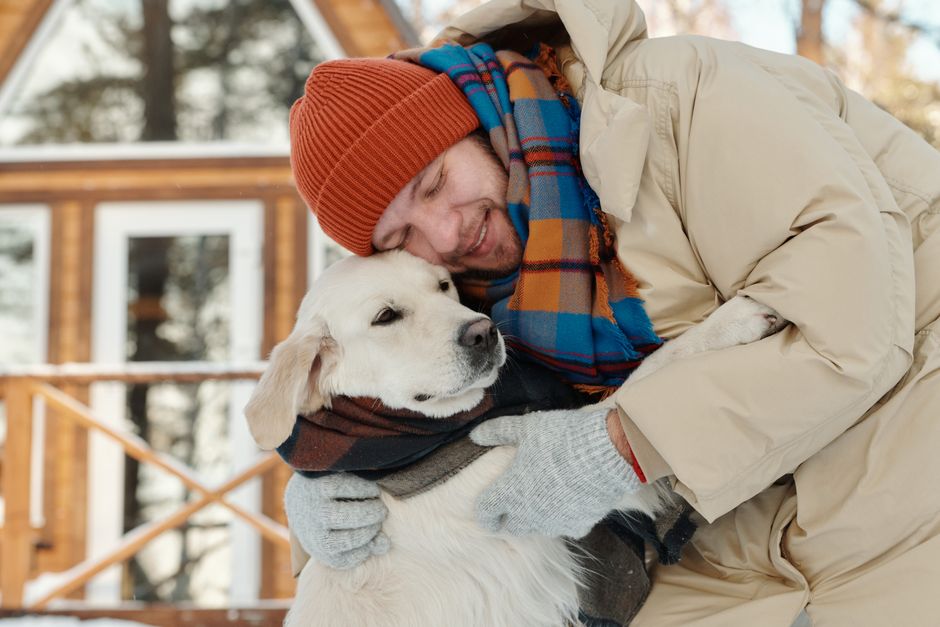
Should the scarf match the coat exactly?
No. Exact matching often makes the scarf disappear and can make the outfit look overly planned. Pick a color that shares one undertone with the coat, such as a rust scarf with a brown coat or a burgundy scarf with charcoal. A small contrast looks more natural than a perfect color match.
When should you skip a thick scarf?
Skip heavy cable knit when the coat already has a high padded collar, a large hood, or heavy insulation around the shoulders. The scarf will compete with the coat instead of improving it. Choose a flat merino, lambswool, or cashmere weave when you need warmth under a compact collar.
How tight should the knot be?
Keep one or two fingers of space between the scarf and your neck. A tight knot feels secure for a few minutes, then becomes uncomfortable and pushes the collar out of shape. Check the scarf after sitting down because many knots tighten when the coat closes across the chest.
Do not ignore care, either. Wool and cashmere hold their shape longer when you fold them loosely instead of hanging them from a narrow hook. Follow the label, remove small pills with a fabric comb, and let the scarf air after a damp commute. Those habits matter more than adding another scarf to the wardrobe.
Four scarf styles can cover nearly every winter coat because the category solves two jobs at once: it protects the neck from cold air and gives the coat a controlled line around the face. As winter clothing keeps moving toward lighter insulation and more flexible layers, the best scarf will be the one that adds warmth without making the coat feel heavier.