
You trim on Monday morning, set the guard too low, and spend the rest of the week waiting for your beard to look intentional again. That mistake usually comes from buying a trimmer by brand reputation or attachment count instead of matching the tool to your actual length, skin, and routine.
For stubble and short beards, the useful range is usually 0.5 to 10 mm. The winning trimmer is not the one with the biggest motor or the most plastic combs. It is the one that gives repeatable length, clean edges, steady power, and enough control to avoid taking off more hair than planned.
Why control matters more than raw motor power
For stubble, length control beats headline power. Short facial hair sits close to the skin, so a small change in cutting depth can change the whole look. A trimmer that jumps from 1 mm to 3 mm may be fine for a full beard but frustrating when you want a neat two-day shadow. The category exists to solve a simple problem: scissors cannot keep thousands of short hairs at one consistent length, while a razor removes the beard altogether.
Match the tool to the look
Stubble normally falls between 0.5 and 3 mm. A 1 mm setting gives a very close shadow, 2 to 3 mm creates the familiar three-day look, and 4 to 6 mm starts to read as a short beard rather than stubble. If your beard grows unevenly, choose a trimmer with fixed or dial-controlled steps instead of a loose collection of combs. Each extra millimeter changes how visible patchy areas look.
Check the blade and guard relationship
The blade should cut cleanly without forcing you to press hard. Pressing harder bends the guard into the skin and makes the final length less consistent. Look for stainless-steel or self-sharpening blades, a guard that locks firmly, and a narrow detail blade for the mustache, corners of the mouth, and neckline. Waterproofing helps with cleaning, but it does not automatically mean the tool is gentle. A fast blade with a badly designed guard can still cause redness and tugging.
The verdict is simple: buy for predictable cutting depth first, comfort second, and extra attachments third.
Which trimmer specifications matter from 0.5 to 10 mm?
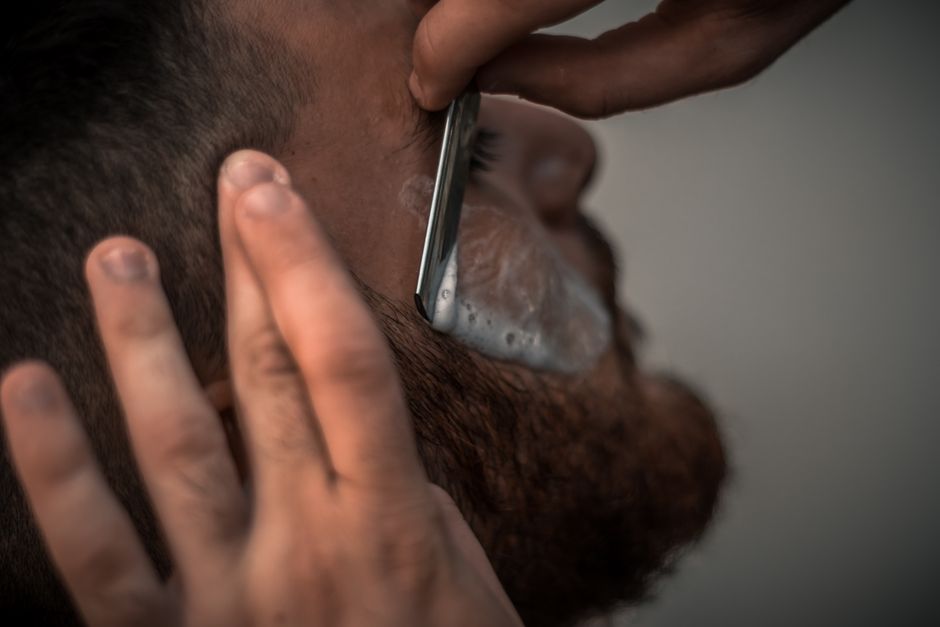
Marketing departments like to advertise cutting power, titanium coatings, and dozens of accessories. Those claims matter less than four numbers: the shortest usable setting, the spacing between settings, cordless runtime, and charging time. A trimmer that offers 40 theoretical settings is not useful if the guard shifts while you move across your jaw.
Read the specifications like a buyer
Start with the minimum length you actually wear. For close stubble, look for a stated setting around 0.5 or 1 mm. For short boxed beards, a range reaching at least 10 mm gives room to shape the chin and mustache. A charging cable that supports use while plugged in is helpful for travel, but a battery with 45 minutes of real trimming time is enough for several short sessions.
| Specification | Useful target | Why it matters |
|---|---|---|
| Shortest setting | 0.5–1 mm | Controls close stubble without forcing a bare shave |
| Length range | 0.5–10 mm or wider | Handles both stubble and a short boxed beard |
| Adjustment steps | 0.5–1 mm | Prevents a large jump between visible beard styles |
| Cordless runtime | 45 minutes or more | Provides several trims before charging |
| Quick charge | 5–10 minutes | Rescues a rushed morning |
| Guard security | Firm click or locking dial | Stops accidental changes mid-trim |
Ignore the numbers that do not answer the problem
Wattage rarely tells you how evenly a beard trimmer cuts. Noise ratings are also hard to compare because brands test them in different ways. A quiet 60 dB trimmer is pleasant, but a stable guard and sharp blade will improve the result more than a small difference in sound. The same applies to accessory counts. Ten nose, body, and head attachments do not help if the beard guard has only three useful positions.
Choose the tool with the clearest length system and the least chance of user error. That is the specification most likely to survive a hurried Monday morning.
How the leading beard trimmers compare on price and control
The shortlist below covers four different buying approaches: low-cost precision, long battery life, a wide adjustment dial, and a more versatile grooming kit. Prices are manufacturer-listed or commonly published list prices checked for 2026, so sale prices may move. The comparison is about fit, not brand prestige.
The short list
| Model | Listed price | Length and battery details | Best use |
|---|---|---|---|
| King C. Gillette Beard Trimmer | $35 | 40 settings in 0.5 mm steps; up to one month of light use per charge | Budget stubble and first-time buyers |
| Philips Norelco Multigroom 7000 MG7750/59 | $69.99 | Up to 6 hours; multiple beard guards and detail tools | One device for beard, head, and body |
| Panasonic ER-GB80-S | $89.99 | 39 settings from 0.5 to 20 mm; up to 50 minutes | Dense short beards and precise dial control |
| Wahl Stainless Steel Lithium-Ion 2.0 | $89.99 | 3.5 hours; 10-position guide plus guards from 1/16 to 1/2 inch | Long battery life and heavier all-purpose use |
| Braun All-in-One Series 7 AIO7540 | Varies by market | 0.5–21 mm; up to 120 minutes; waterproof | Beard, body, and edging in one kit |
The King C. Gillette wins on price and fine half-millimeter changes, but it has less range for someone growing beyond short stubble. The Panasonic ER-GB80-S is the better choice for a dense beard because its dial and 0.5 to 20 mm range make length changes easy to repeat. The Wahl offers the strongest battery case, while the Philips has the best value if you will actually use its extra tools.
Bottom Line: For most people focused on stubble and short beards, the Panasonic ER-GB80-S is the strongest control-first pick. The King C. Gillette Beard Trimmer is the clear budget winner at $35.
How to trim stubble without creating patches
Even the best trimmer can produce a rough result if you use it on wet hair, start with the wrong guard, or keep changing direction. Use a repeatable routine. It takes about ten minutes and removes most of the guesswork.
The practical workflow
- Trim dry hair. Wet beard hair stretches and can spring back shorter after it dries. Wash first if needed, then wait until the hair is fully dry.
- Brush or comb the beard down. This exposes hairs that curl away from the face and gives you a more honest view of the density.
- Start one setting longer than planned. If you want 3 mm, begin at 4 mm. Move down only after checking the cheeks, jaw, and neck in bright light.
- Use slow passes against the grain. Move from the neck toward the jaw and from the cheeks toward the center of the face. Do not push the guard into the skin.
- Check both sides after every major pass. Hair density differs from left to right, so copying the same number of strokes does not guarantee symmetry.
- Remove the guard only for edges. Clean the upper cheek, mustache corners, sideburn connection, and neckline with the detail blade.
- Finish below the neckline with a razor or foil head. A trimmer leaves short shadow; it is not always the best tool for a smooth neck.
Mistakes that make a good trimmer look bad
- Starting at 1 mm because the beard looks uneven. This often removes the density you were trying to preserve.
- Trimming immediately after a hot shower. Swollen skin and stretched hair produce a shorter-looking result.
- Using a loose comb on the jawline. If the guard rocks, replace it or switch to a locking dial.
- Chasing one stray hair by lowering the entire beard. Use the detail blade instead.
- Skipping cleaning. Hair and skin oil slow the blade, increase tugging, and can make the next trim uneven.
The best maintenance schedule is usually every two to four days for stubble and once or twice a week for a short beard. Adjust the timing to growth speed, but keep the same guard and direction so the look stays repeatable.
Which beard trimmer should you buy, and when should you skip one?

Is the cheapest option good enough?
Yes, if your target is 1 to 5 mm and you only need facial grooming. The $35 King C. Gillette Beard Trimmer gives unusually fine 0.5 mm steps for the money, making it the best entry point for a buyer who wants to test stubble lengths without spending $90. Buy the Panasonic ER-GB80-S instead if your beard is dense, your preferred length changes often, or you want a range up to 20 mm.
Should you buy a multi-grooming kit?
Only if you will use the other heads. The Philips Norelco Multigroom 7000 MG7750/59 is a strong value at its $69.99 list price because its six-hour battery and broad accessory set cover more than the face. Braun’s AIO7540 is the better premium alternative for someone who wants waterproof body grooming and a 0.5 to 21 mm range. Skip both if you only trim stubble; extra attachments become drawer clutter, not extra value.
Final recommendation: For most readers maintaining 1 to 6 mm stubble or a short beard, buy the Panasonic ER-GB80-S for its 0.5 mm dial control and wide range. Choose the King C. Gillette Beard Trimmer when price matters most, and skip a multi-grooming kit unless you have a real use for its extra heads.